
Frozen & Burst Pipe Cleanup in Cartersville, GA
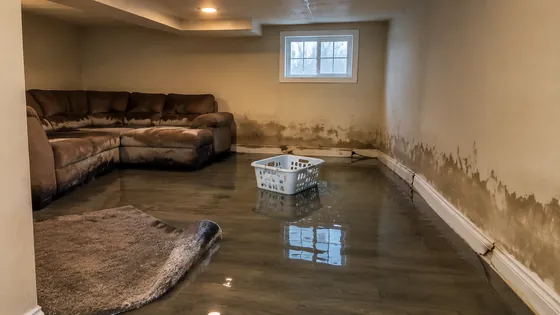
When a frozen pipe splits, the damage does not show up until it thaws. Then the water comes out all at once, usually while no one is home, and it runs for hours. We pump out flooded basements and crawl spaces, then do the deep structural drying of floors, drywall and wall cavities that a ruptured line leaves behind.
This page covers why Georgia houses are exposed, what to do in the first minutes, what we do after, and how to keep it from happening again. The frozen and burst pipe checklist puts the steps in a list you can print.
Frozen and burst pipe services
- Emergency pump-outStanding water pumped out of a flooded room, basement or crawl space.
- Flooded basement water removalWater extracted, wet carpet and pad removed, and walls read and dried.
- Crawl space water removalWater pumped out from under the house, wet insulation taken down, joists dried.
- Ceiling and wall cavity dryingBulging ceilings drained, wet insulation removed and cavities dried before closing up.
- Structural drying with readingsAir movers and dehumidifiers run until floors and walls match dry reference points.
- Insurance documentationPhotos, moisture readings, an equipment log and a list of what was removed.
Why a Georgia house is easy prey for a hard freeze
Houses in this part of the state were built for winters that mostly stay above freezing. Supply lines run through crawl spaces, exterior walls and attics with thin insulation, and few of them are protected for a stretch of hard cold. A pipe that has been fine for twenty winters can freeze the one year the temperature stays low for two nights in a row.
What happens when a frozen pipe thaws
Ice expands. It does not always break the pipe where it forms. The split is often a few inches or a few feet away, where pressure built between the ice plug and a closed faucet. The pipe holds while it is frozen. When the ice melts, water flows through the crack.
The most common spots are the ones closest to the cold: pipes along an exterior wall, lines in a crawl space near a foundation vent, runs in an attic, and outdoor spigot connections that were never drained.
What to do in the first minutes when a pipe bursts in the wall
- Shut off the main water. Find the valve and turn it off. That stops the flood.
- Mind the power. If water is near outlets, or coming through a ceiling with lights in it, cut power to that part of the house at the panel. Do it only if you can reach the panel dry.
- Open a low faucet. It drains the remaining water out of the system.
- Take photos and video before you move anything.
- Move what you can off wet floors, and call us.
What the December 2022 freeze did to north Georgia temperatures
The Christmas freeze of December 2022 is the one most people here remember. The National Weather Service's December 2022 climate summary lists a monthly minimum of 7°F at Cartersville on December 24, 9°F at Rome and 8°F in Atlanta. Athens recorded 7°F on the same date.
That is cold enough to freeze lines in an unheated crawl space and in exterior walls. It is also the kind of cold that comes back, so be ready for the next one.
Source: NWS Peachtree City, December 2022 Climate Summary.
Our burst pipe cleanup process
- Call and shutoffWe talk you through closing the main so the flooding stops.
- Safety checkPower near the water comes first, then slip hazards.
- Remove the waterPumps and extractors take out the standing water.
- Find what is wetWe read floors, walls and ceilings and open the places that hold water.
- DryFans and dehumidifiers run, and wet insulation and soft material come out.
- Final readingsWe read it again and give you the numbers and the log.
You always know the next step. We tell you what we are doing before we do it.
Flooded basement water removal and structural drying
We start with extraction. Pumps and extractors take the standing water out, and whatever we pull out now does not have to be dried later. Then we take moisture readings in the floor, the walls and the ceiling below any burst line, and mark what is wet.
Drying equipment goes in next: air movers to push air across wet surfaces, dehumidifiers to pull the moisture out of the air. We open wall cavities when we have to, by cutting the drywall low or drilling small holes so air can get in. Wet carpet pad and wet insulation do not dry well and come out. We come back, read the meters again and move the equipment until the readings are dry.
Water coming through the ceiling from a pipe
A burst line in an attic or second-floor wall sends water through a ceiling and down the walls below. A ceiling that is bulging holds water. We puncture it in a controlled way so the water drains where we can catch it, which beats waiting for it to fall on its own. Then the wet drywall and the insulation above it come out, and the cavity gets dried before anything is closed up.
The wall below needs readings too. Water follows studs, wires and pipes, so a stain in the living room can trace back to a bathroom upstairs. A winter ceiling leak with no pipe behind it may be an ice dam roof leak.
How long to dry walls after a pipe burst
The EPA says drying a flooded house usually takes several days to weeks. The EPA also says mold can grow on wood, drywall and carpet that stay wet for more than 24 hours. Together those say the same thing: speed matters, and drying is slower than most people expect.
A typical room with a single burst line is often three to five days with equipment running. Thick or layered materials, a wet subfloor under hardwood, or water in several rooms take longer. We stop when the readings match the dry reference, not when a calendar says to.
Source: EPA, Flood Cleanup: Protect Indoor Air and Your Health.
The basics of a burst pipe insurance claim
Policies differ, so read yours or call your agent. In general, a sudden burst is treated differently from a slow leak that went on for months. Most adjusters want to know when it happened, what you did to stop it and how fast you acted. Keep the photos and the moisture readings, and keep receipts for anything you pay for.
We give you the readings, the equipment log and a list of what we removed. Your insurance company decides what is covered.
Protect the pipes before the next freeze
- Drip the faucets served by exterior-wall and crawl space lines. A trickle keeps water moving.
- Open the cabinet doors under sinks on exterior walls so room heat reaches the pipes.
- Insulate exposed lines in the crawl space and attic.
- Close the foundation vents before a hard freeze, so cold air does not blow across the pipes.
- Disconnect hoses from outdoor spigots.
- Know where the main shutoff is and make sure everyone in the house can work it.
If the freeze is already here and you want to price the damage, the water damage restoration cost calculator gives a planning range, not a quote. Call for an on-site assessment. We cover Cassville and White, where older homes and rural lines can take the worst of a hard freeze.
Burst pipe questions
- My pipe froze but did not burst. What now?
- Open the faucet it feeds, turn up the heat and open the cabinet doors under the sink. Never use a torch or open flame to thaw a pipe. If you see a crack or water, shut off the main.
- Where is the main water shutoff in a Cartersville house?
- Look where the line enters the house: inside the front wall, in a crawl space, in the basement, or at a meter box by the street. Find it before you need it.
- How long does it take to dry after a burst pipe?
- A room is often three to five days. Walls, ceilings and subfloors can take longer. The EPA says drying after flooding usually takes several days to weeks.
- Does insurance cover a burst pipe?
- Many homeowners policies cover sudden water damage from a burst pipe and treat slow leaks differently. Policies vary, so call your agent and ask.